
Testosterone Replacement Therapy in Stuart, FL

Why Am I Feeling More Tired, Slower, Less Motivated, or Just Not Like Myself Anymore?
Many men gradually notice changes that traditional medicine dismisses as simply “getting older.” Energy declines. Recovery slows. Motivation drops. Muscle mass decreases while abdominal “dad bod” fat increases. Brain fog, poorer sleep, reduced libido, irritability, and declining physical performance slowly creep in over time.
These subtle changes are often early signs of deeper hormonal, metabolic, inflammatory, and vascular imbalance that traditional medicine may overlook until major problems develop. Men may appear outwardly successful and functional while visceral fat, frailty, metabolic syndrome, and hormonal decline quietly progress underneath the surface.
At Unison Pro-Youth Institute, Testosterone Replacement Therapy (TRT) is not viewed simply as a vanity or sexual wellness treatment. Symptoms such as fatigue, erectile dysfunction, body composition changes, and low motivation are often warning signs of a broader underlying imbalance. Our philosophy is to identify and address root causes proactively rather than simply masking symptoms.
You may be a good candidate if you are experiencing:
- Fatigue or declining stamina
- Brain fog or reduced focus
- Reduced libido or sexual performance
- Loss of muscle mass or strength
- Increased abdominal or visceral fat
- Mood changes, irritability, or low motivation
- Slower recovery or declining performance
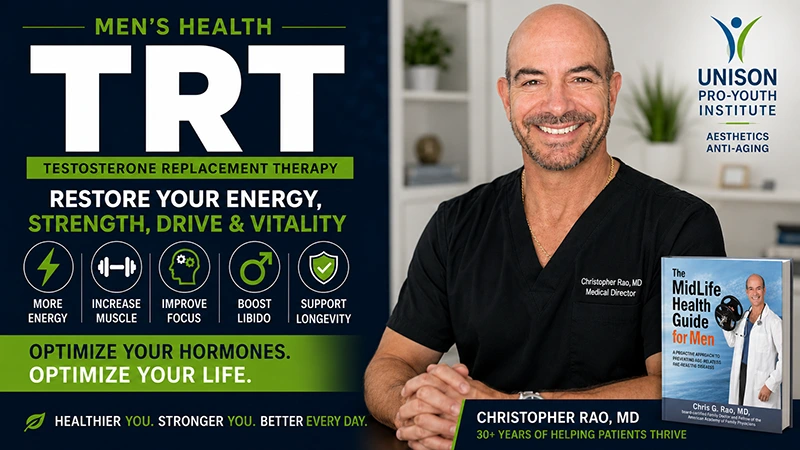
At Unison Pro-Youth Institute, we focus on helping men optimize energy, body composition, strength, metabolism, resilience, confidence, and long-term quality of life through personalized, physician-led care.
Book a complimentary testosterone evaluation — or call (772) 286-0226.
Why Can Low Testosterone Affect So Many Areas of Health?
Testosterone is far more than simply a “sex hormone.” Like other hormones, it acts as a powerful chemical messenger that influences virtually every organ system and tissue in the body, including the brain, muscles, metabolism, cardiovascular system, bones, skin, energy systems, and sexual function.
As testosterone levels decline with age, stress, inflammation, visceral fat accumulation, poor sleep, medications, or other health factors, many men begin noticing gradual physical and emotional changes that affect quality of life and overall performance. Energy may decline. Muscle mass and resilience decrease. Abdominal fat increases. Mood, confidence, motivation, cognition, libido, sleep, and metabolic health may all begin to suffer.
At Unison Pro-Youth Institute, we believe testosterone optimization should focus on the bigger picture of overall wellness, body composition, strength, vitality, cognition, metabolism, and healthier aging rather than simply addressing one isolated symptom at a time. Our philosophy is proactive and root-cause oriented – helping identify and address subtle imbalances before they contribute to more significant decline over time.
Why One Testosterone Number Isn’t the Whole Picture
Many men are told by today’s healthcare providers that fatigue, weight gain, low libido, poor sleep, irritability, or declining performance are simply a “normal part of aging” without fully evaluating hormone levels, metabolism, inflammation, body composition, sleep quality, or overall wellness.
Unfortunately, much of modern healthcare has become rushed and reactive. Providers are often pressured to see extremely high patient volumes with little time to truly listen, connect, individualize care, investigate root causes, or carefully adjust treatment over time. Too often, it becomes a one-size-fits-all approach: one medication for each symptom, brief follow-up, and quickly on to the next patient.
Men may end up on multiple medications for mood, sleep, erectile dysfunction, cholesterol, blood sugar, fatigue, or weight gain, while underlying hormonal and metabolic decline quietly continues underneath. The side effects, costs, interactions, and downstream consequences of stacking medications can themselves become overwhelming.
Traditional approaches may not fully address:
- Hormonal imbalance and metabolic slowing
- Low energy, stamina, and resilience
- Reduced muscle mass and increasing visceral fat
- Mood, motivation, and mental clarity
- Sexual wellness and performance concerns
- Inflammation, metabolic health, and body composition
- Long-term vitality, strength, and quality of life
At Unison Pro-Youth Institute, our philosophy is different. Testosterone optimization uses a personalized, physician-guided, root-cause approach designed around each patient’s symptoms, hormone levels, body composition, metabolism, lifestyle, and long-term wellness goals rather than simply masking symptoms one at a time.
Our Approach to Male Hormone Optimization
At Unison Pro-Youth Institute, hormone wellness is personally guided by Dr. Chris Rao and built around a proactive, functional, evidence-based philosophy focused on optimization, prevention, and healthier aging – not simply reacting after decline occurs.
Rather than using a one-size-fits-all approach, we evaluate:
- Testosterone and overall hormone balance
- Symptoms, energy, mood, and cognition
- Sleep quality and recovery
- Lifestyle, stress, nutrition, and exercise habits
- Strength, body composition, and visceral fat
- Long-term wellness and healthy aging goals
Our goal is not simply temporary symptom relief. We focus on helping patients optimize energy, vitality, resilience, confidence, metabolism, strength, sexual wellness, and long-term quality of life through personalized, physician-led care.
Schedule your complimentary, no-obligation consultation today and let us create a customized wellness and performance plan designed specifically for you.
Testosterone Therapy Options We Offer
Low testosterone treatment may help support:
- Energy, stamina, and resilience
- Mental clarity, focus, and motivation
- Mood, confidence, and emotional wellness
- Libido, sexual wellness, and performance
- Muscle mass, strength, and recovery
- Reduction of visceral “dad bod” fat and metabolic decline
- Healthier body composition and overall vitality
Treatment options may include topical gels, pellets, or simple injections, depending on your preferences, lifestyle, goals, and response. The goal is to find the safest, most effective, and most practical approach tailored specifically for you.
In some cases, additional supportive therapies such as DHEA or carefully selected HGH-support peptides may also be recommended to work synergistically together and help get all “8 cylinders” of that muscle car engine firing closer to its earlier glory days again.
Proper monitoring, follow-up, laboratory evaluation, and individualized adjustment are essential for helping ensure the safest and best long-term results – something Dr. Chris Rao has emphasized and practiced for over 30 years.
Training, Recovery and Metabolic Support
Depending on your goals, treatment may also be combined with:
- Nutrition and exercise guidance
- Peptides and metabolic support
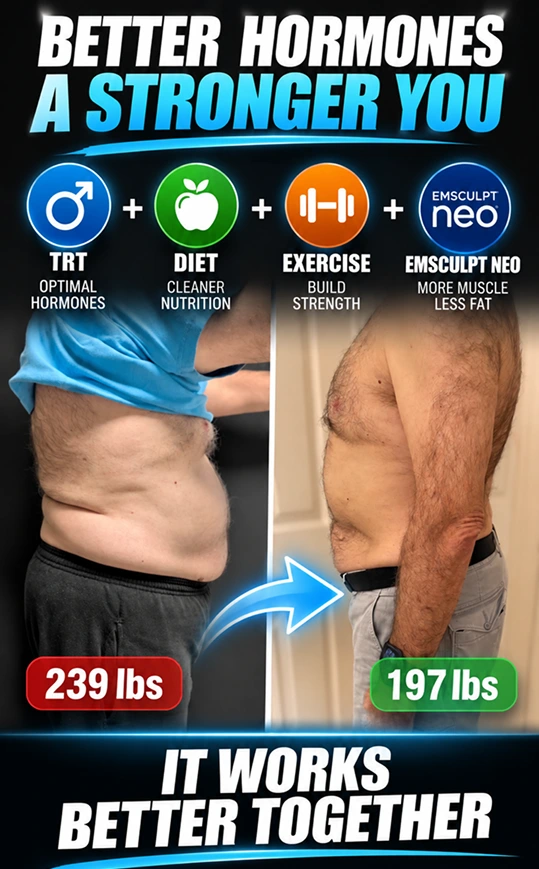
- Emsculpt NEO body composition optimization
- Emsella sexual wellness support
- Exomind cognitive and stress support
- Functional wellness and healthy aging strategies
At Unison Pro-Youth Institute, our goal is to help patients function stronger, think more clearly, perform better, and age more successfully from the inside out.
Testosterone Therapy vs Symptom-Only Approaches
Many traditional approaches focus on treating symptoms separately rather than evaluating overall hormone balance, metabolism, body composition, vitality, and long-term wellness.
Symptom-Only Approaches
- Often treat isolated symptoms one at a time
- Limited hormone and metabolic evaluation
- Frequently reactive rather than proactive
- May rely on multiple medications with accumulating side effects
- Often fail to address visceral fat, frailty, declining strength, motivation, or long-term wellness
- Many medications may contribute to weight gain, fatigue, sexual dysfunction, poor sleep, or emotional blunting – often the opposite of what patients want
Testosterone Therapy Approach
- Personalized hormone and metabolic evaluation
- Physician-guided, root-cause approach
- Focused on vitality, body composition, resilience, and wellness
- Tailored to each patient’s symptoms and goals
- Supports energy, strength, cognition, libido, and healthier aging
- Properly monitored TRT is often safer and more physiologic than stacking multiple reactive symptom-based medications
At Unison Pro-Youth Institute, our goal is to help men optimize function, performance, confidence, vitality, and long-term quality of life rather than simply masking symptoms.
Why Choose Unison Pro-Youth Institute for Testosterone Replacement Therapy in Stuart, FL?
At Unison Pro-Youth Institute, testosterone optimization is personally guided by Dr. Chris Rao, who has spent over 30 years studying, teaching, and implementing hormone wellness, functional medicine, metabolism, body composition, healthy aging, and proactive age-management strategies – long before many of these approaches became mainstream.
Our philosophy is simple: first determine what is safe, then what is evidence-based and effective. Rather than simply treating isolated symptoms or relying on one-size-fits-all protocols, we focus on identifying and addressing underlying hormonal, metabolic, inflammatory, lifestyle, and wellness-related imbalances that may quietly contribute to declining energy, visceral fat, frailty, poor recovery, reduced performance, low libido, mood changes, and loss of vitality over time.
Every treatment plan is highly personalized based on symptoms, laboratory testing, body composition, goals, lifestyle, and long-term wellness needs. Proper monitoring, follow-up, and individualized adjustment are essential to helping achieve the safest and best long-term outcomes – something Dr. Rao has emphasized throughout decades of practice.
We believe hormone health affects nearly every aspect of life, including energy, sleep, cognition, metabolism, resilience, strength, confidence, body composition, sexual wellness, and overall quality of life. Our goal is not simply helping patients “get by,” but helping them function stronger, think more clearly, perform better, and age more successfully from the inside out.
Schedule your complimentary, no-obligation consultation today and let us create a personalized wellness and performance plan tailored specifically to your goals, lifestyle, and healthiest future.
Frequently Asked Questions
How long does testosterone therapy take to work?
Many patients notice improvements in energy, mood, and libido within several weeks, although results vary depending on hormone levels, treatment plans, and overall health. Full benefits may continue to develop over time.
How low does testosterone have to be for treatment?
Treatment decisions should never be based on a single laboratory number alone. Unfortunately, many men are told they are “normal” simply because they barely fall within a very broad laboratory range – even while experiencing fatigue, visceral fat gain, poor recovery, low libido, brain fog, declining strength, poor sleep, irritability, or loss of vitality.
Hormone optimization is far more individualized than a simple “pass-or-fail” lab test. Age, symptoms, body composition, metabolism, sleep, stress, medications, and overall function all matter. Two men with identical testosterone levels may feel and perform very differently.
At Unison Pro-Youth Institute, we believe it makes little sense to wait until someone becomes truly ill, frail, metabolically damaged, or significantly dysfunctional before taking action. Our philosophy is proactive, focused on identifying and addressing subtle hormonal and metabolic decline before larger problems develop later.
The real question becomes: do you simply want to feel “normal” and get by – or do you want to feel stronger, sharper, healthier, more energetic, and closer to how nature intended you to function in your younger years?
Is testosterone replacement therapy only for older men?
No. Some younger men may also experience low testosterone levels or hormone-related symptoms depending on lifestyle, health conditions, or other factors.
Can low testosterone affect the brain, mood, and motivation?
Yes. Testosterone is far more than simply a “sex hormone.” It is a powerful chemical messenger that influences virtually every organ system in the body – including the brain. Testosterone levels may affect mood, focus, motivation, confidence, mental clarity, stress tolerance, resilience, emotional wellness, and overall cognitive performance in many men.
As testosterone declines, many men notice gradual changes such as brain fog, lower motivation, irritability, reduced confidence, fatigue, poorer focus, lower stress tolerance, memory concerns, or the classic “grouchy old man” syndrome. These symptoms are often dismissed as simply stress, burnout, or normal aging when deeper hormonal, inflammatory, metabolic, sleep, or vascular imbalance may actually be contributing.
Brain health is one of the biggest health concerns people have, yet traditional medicine has often taken a surprisingly passive approach to cognitive aging compared to conditions like heart disease or cancer. At Unison Pro-Youth Institute, we believe the brain deserves the same proactive, optimization-focused attention as the rest of the body.
Our approach focuses on identifying and addressing root-cause imbalances that may affect cognition, mood, motivation, vitality, and long-term brain health. Depending on individual needs, this may include testosterone optimization, Exomind brain support, sleep optimization, exercise, nutrition, supplements, metabolic wellness, stress reduction, and other healthy aging strategies designed to help patients think clearer, feel sharper, perform better, and maintain long-term quality of life.
The encouraging news is that it is never too late to support a healthier brain – but the earlier proactive steps begin, the better.
Is TRT meant to replace healthy habits?
No. Testosterone Replacement Therapy is designed to support and optimize wellness alongside healthy nutrition, exercise, sleep, stress management, and lifestyle habits – not replace them. Many men become frustrated because despite working harder than ever, age-related hormonal and metabolic resistance makes it increasingly difficult to maintain muscle, energy, recovery, motivation, metabolism, and healthy body composition while visceral “dad bod” fat quietly accumulates. At Unison Pro-Youth Institute, we take a comprehensive, integrative approach designed to help address these hormonal, metabolic, inflammatory, sleep, stress, and body composition changes so patients can function closer to their best again.
Depending on individual goals, treatment plans may also include exercise guidance, nutrition, supplements, peptides, metabolic optimization, Emsculpt NEO, Exomind, sleep improvement, and other healthy aging strategies designed to help patients feel stronger, perform better, and age more successfully.
Proper monitoring, laboratory evaluation, and individualized adjustment are critical for both safety and effectiveness – something Dr. Chris Rao has emphasized and practiced for over 30 years.
How do I know if my hormones are low?
The pattern men describe is usually more gradual than dramatic: waking unrested, losing the drive that used to be automatic, training as hard as ever and losing ground on strength and lean mass, gaining weight around the middle, reduced libido, fewer morning erections, and a flatness of motivation that is easy to write off as work or age.
Diagnosis is not made on symptoms. Testosterone follows a daily rhythm and peaks in the morning, so it is measured on two separate early-morning draws, typically between 7am and 10am, rather than once. Alongside total testosterone we look at free testosterone and SHBG — which determine how much is actually available to your tissues — plus LH and FSH, which tell us whether the signal is failing at the testes or at the pituitary, and estradiol and prolactin.
That distinction matters, because it changes what the right treatment is. Some men who feel this way do not need testosterone at all.
How do I start TRT?
The first step is scheduling a consultation. During your visit, we will review your symptoms, health history, lifestyle factors, and appropriate laboratory testing to determine whether Testosterone Replacement Therapy or another personalized wellness strategy may be appropriate for your needs.
Your First 90 Days on TRT
Testosterone therapy is a monitored medical treatment rather than a prescription you collect and manage alone. The first three months establish your baseline, confirm you are responding as expected, and catch the effects that need watching before they become problems.
Step 1: Baseline Testing Before Anything Is Prescribed
Treatment does not begin on symptoms alone. Diagnosis requires confirmed low testosterone on at least two separate morning blood draws, since levels vary considerably through the day and a single reading is not sufficient. Alongside total and free testosterone, baseline work typically includes a complete blood count, a metabolic panel, lipids, estradiol, and LH and FSH to help identify why levels are low.
For men over 40, or younger men with relevant family history, a PSA and prostate assessment is done before starting. This matters because testosterone therapy is not initiated without knowing where the prostate stands.
Step 2: Starting Treatment
Once results are reviewed with you and treatment is agreed, you start on a dose chosen for your baseline levels, your symptoms, and your health history. The aim is to restore testosterone to a healthy physiological range rather than pushing it as high as possible, and starting conservatively is deliberate.
You will be shown how administration works and what to expect in the first weeks. Some men notice changes in energy and mood within a few weeks, while changes in body composition take considerably longer.
Step 3: The Six to Eight Week Review
Your first follow-up bloodwork checks whether your testosterone has reached the intended range and looks at the markers most likely to shift early. Hematocrit is the one watched most closely, as testosterone stimulates red blood cell production and a rise above the acceptable range needs addressing rather than ignoring.
Estradiol is reviewed at the same point, since testosterone converts to estrogen and the balance between them affects how you feel. Dose is adjusted at this visit if the numbers or your symptoms call for it.
Step 4: The Three Month Review
By three months, there is enough information to judge whether the current dose is right. Bloodwork is repeated, symptoms are reviewed against where you started, and PSA is rechecked where it was part of your baseline.
This is also the point where honest assessment matters. If symptoms have not improved despite levels being in range, that is worth investigating rather than escalating the dose, because low testosterone is not always the whole explanation for how someone feels.
Step 5: Ongoing Monitoring
After the first three months, monitoring typically settles into every six months and then annually once you are stable, though it never stops entirely. Ongoing review covers testosterone levels, hematocrit, PSA where applicable, and how you are actually doing.
Treatment is generally long-term. Testosterone therapy suppresses your body’s own production while you are on it, so stopping usually means symptoms return, and any decision to stop should be made with your provider rather than by discontinuing on your own.
Risks, Side Effects, and What We Monitor
Testosterone therapy is well established and, in appropriately selected and monitored patients, generally well tolerated. It is still a medical treatment with real effects that need watching, and you should understand them before starting rather than after.
Effects We Monitor With Bloodwork
- Raised Red Blood Cell Count: Testosterone stimulates red blood cell production, and an elevated hematocrit is the most common finding requiring action. It is checked at every review and managed by adjusting dose, changing administration, or in some cases donating blood.
- Changes in Estradiol: Testosterone converts to estrogen, and some men experience effects from that conversion, including breast tenderness or tissue changes. Estradiol is monitored and managed where needed.
- Prostate Markers: PSA is monitored for men over 40 and for younger men where indicated. Testosterone therapy is not started without a baseline, and changes over time are reviewed rather than assumed benign.
Effects You May Notice
- Skin Changes: Acne and oilier skin are common early on, particularly in the first months, and often settle as the dose stabilizes.
- Injection Site Reactions: Soreness or minor swelling where treatment is administered, generally brief.
- Fluid Retention: Some men notice mild swelling, particularly in the ankles, more commonly at higher doses.
- Mood and Sleep Changes: Most men report improvement, but some experience irritability or disrupted sleep, particularly during dose adjustment. Report either side effect rather than waiting for your next review.
- Worsening of Sleep Apnea: Testosterone can worsen existing obstructive sleep apnea. Tell us if you have been diagnosed with it or if a partner has noticed you stop breathing during sleep.
Fertility: The One to Understand Before You Start
Testosterone therapy suppresses your body’s own testosterone production, and with it, sperm production. For many men on treatment, this means significantly reduced fertility, and in some cases it does not fully recover after stopping.
If you may want children in the future, say so before treatment begins rather than afterward. There are alternative approaches that support testosterone levels without the same effect on fertility, and there are steps that can be taken alongside treatment. Both need to be planned from the start, which is why this conversation belongs at your first appointment.
Who Should Not Start TRT
Testosterone therapy is not appropriate for everyone. It is not started in men with untreated prostate or breast cancer, and it requires careful assessment where there is significant untreated sleep apnea, a high baseline hematocrit, uncontrolled heart failure, or a history of blood clots.
Your full history, current medications, and existing conditions are reviewed before treatment is considered. If testosterone therapy is not the right approach for you, we will tell you that directly and discuss what might be.
Low testosterone is straightforward to test for and straightforward to rule out, and knowing either way is more useful than wondering. A consultation starts with bloodwork rather than a prescription.
Call (772) 286-0226 or book your consultation at our Stuart office, 528 SE Osceola Street, Suite #2, Stuart, FL 34994. We will review your results with you before any treatment is discussed.